


How to Spend Less Time Managing Your Payroll
Running payroll should be routine, but for many businesses, it becomes a weekly scramble. Missing punches, late timesheets, inconsistent records, and last-minute corrections turn a simple task into hours of cleanup. Payroll isn’t complicated on its own, but the messy processes around it make it stressful and time consuming.
The good news? With the right system and a few smart adjustments, payroll can go from a burden to a smooth, predictable workflow. Here’s how to spend less time managing payroll and more time running your business.
How Much Time Do Companies Spend on Payroll Management?
Most employers underestimate how long payroll actually takes because it’s a series of small steps that add up every week. And especially when done manually, it’s inefficient: a recent Deloitte payroll report found that companies that automate payroll can reduce errors by up to 50% and cut processing time by about 25%.
Payroll cycles vary widely by industry and there are many moving parts, especially with manual approvals and data entry.
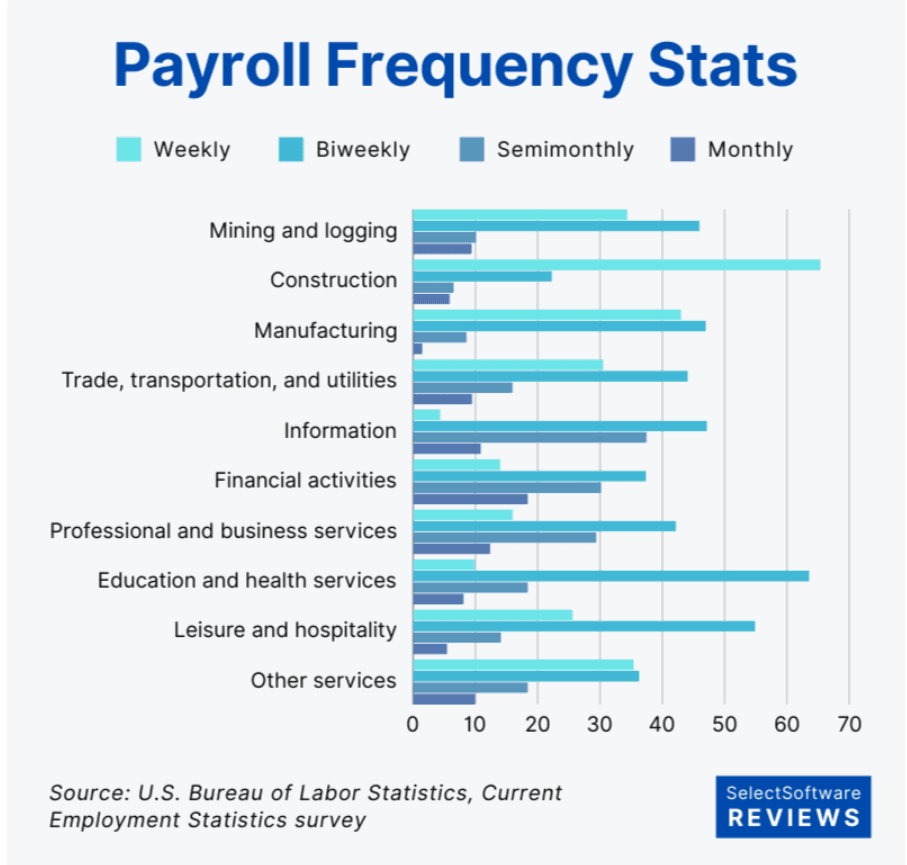
[Alt Text: Bar chart showing payroll frequency by industry, comparing weekly, biweekly, semimonthly, and monthly pay cycles in U.S. sectors.]
The real work starts even before payroll processing: tracking down missing hours, correcting handwritten timesheets, reconciling gaps, and validating employee records. Then, during processing, teams spend even more time double-checking numbers and handling last-minute changes.
So while payroll looks like a once-per-cycle duty, it often turns into an ongoing project that consumes valuable time and energy.
4 Common Challenges That Slow Down Payroll Management
Most payroll slowdowns aren’t payroll problems at all; they’re time tracking problems. They start at the very beginning of the process and compound along the way.
Here are four issues that come up again and again:
- Data Gaps and Accuracy Problems
A lot of payroll trouble comes from the basic necessity of getting clean, accurate information.
- Mistakes in employee data
It only takes one wrong digit in a bank account or a missed update in someone’s pay rate to throw payroll off. Small errors often create big delays.
- Unreliable time data
Tracking hours, overtime, and breaks remains one of the hardest parts, especially when managing hourly teams, remote workers, or teams with different schedules.
- Gaps in records
Missing leave balances, outdated deduction details, and inconsistent salary information make it harder to answer questions or resolve disputes later.
2. Compliance Pressure and Payroll Complexity
Payroll isn’t just “hours × rate.” It’s built on constantly moving rules and calculations.
- Shifting regulations
Labor laws, tax rules, and benefit requirements change often. Keeping up with them takes time, and missing something can lead to costly penalties.
- Many types of pay
Overtime, bonuses, commissions, shift differentials, contractor pay — each one has its own calculation method. The more variety you have, the easier it is for mistakes to slip in.
- Benefit deductions
Health insurance, retirement contributions, reimbursements, and other perks need to be deducted correctly for every person, every cycle.
3. System Limitations and Process Slowdowns
Even when your data is correct, the systems you use can create their own challenges.
- Old or manual systems
Spreadsheets, outdated software, and paper forms slow everything down and increase the likelihood of errors.
- Tools that don’t connect
When HR, time tracking, and payroll all live in different systems, someone has to move information around manually, which takes time, creates bottlenecks, and introduces more opportunity for human error.
- Technical hiccups
System downtime, slow platforms, or maintenance during peak times can stall payroll entirely.
4. Employee Queries and Security Responsibilities
The human side of payroll adds another layer of complexity.
- Employee questions and disputes
Errors, delays, or lack of visibility in payroll lead to a constant stream of questions:
“Can you check my hours?”
“Why is my pay different this time?”
“Where’s my overtime?”
Each query takes time to answer and slows down the whole process.
- Data security concerns
Payroll involves sensitive employee information like bank accounts, personal details, and tax data. Protecting this information from breaches or unauthorized access is critical and requires proper systems and internal controls.
How to Spend Less Time Managing Your Payroll
The fastest way to save time is to remove friction, especially that which develops before payroll even begins. Let’s take a look at how to simplify the entire workflow.
Automate as Much as Possible
A lot of the stress comes from the belief that payroll automation is complicated or costly. In reality, modern systems have become simpler to use and far more affordable than most business owners expect.
And the best part? Automation removes the repetitive tasks that cause the most mistakes.
For example:
- Hours flow directly into payroll without retyping or importing anything
- Overtime rules, bonuses, shift differentials, and deductions get calculated automatically
- Tax rates, compliance updates, and statutory changes are handled by the system
- Validation checks highlight missing or incorrect data before payroll runs
- Reports that once took hours can be generated instantly
Employees can update their own bank details, tax info, or basic records without HR chasing them. A centralized database means all employee information stays in one place. When everything lives inside the same system, like time, attendance, pay rules, and employee data, you eliminate five or six manual steps at once.
Just be sure to vet the provider. Call their support line, email them, or use their chat. If they don’t respond while you’re trying to buy, they definitely won’t respond when payroll is due.
Make It Easy to Record Working Hours
Payroll slows down when time tracking is messy. If employees send hours through texts, emails, or handwritten notes, someone ends up doing detective work every week.
Making time tracking simple sets up payroll to run cleanly from the start (because that’s where the problem begins).
Here’s what helps:
- Employees use one system to clock in and out, no matter where they work
- Mobile access makes it easy for remote or field teams to log hours accurately
- Automated reminders prompt employees to submit or approve hours before the deadline
- Managers get notified of missed punches or pending approvals
- Everyone follows a clear, consistent schedule for submitting timesheets
With the right tools, employees and managers can quickly enter, correct, and approve hours without extra back-and-forth.
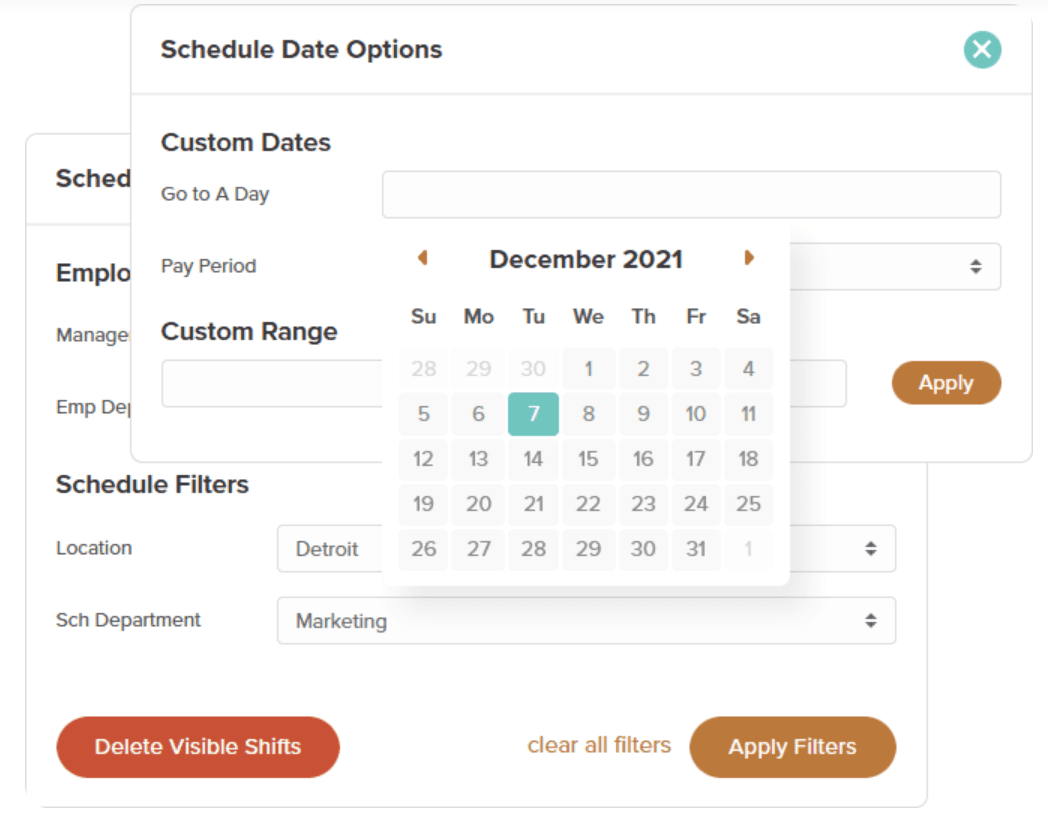
[Alt Txt: Screenshot of a scheduling calendar and filters for managing employee shifts and time entries in a payroll system.]
Keep Your Documentation Up to Date
Good documentation prevents many of the issues businesses deal with during payroll. That means:
- Clearly defined rules for overtime, breaks, leave, reimbursements, and approvals
- Updated policies are stored digitally, so no one is relying on outdated paperwork
- Simple templates for changes like salary revisions, bank updates, or tax adjustments
- A payroll calendar that outlines every deadline
The more transparent your policies are, the fewer last-minute surprises your payroll team has to deal with.
Keep Your Payroll Records Clean
Clean data is the backbone of smooth payroll. If records are inconsistent or scattered, every cycle turns into a fire drill. Keep things organized using these tips:
- Run quick mid-cycle checks to catch errors early
- Use alerts or system flags for missing hours, missing bank info, outdated IDs, or incorrect tax details
- Keep all employee information in one reliable place instead of multiple files
- Follow a simple pre-payroll checklist so nothing slips through
- Regularly review pay rates, PTO balances, deductions, and benefit information
Small mistakes add up, sometimes for an entire year. Businesses often discover later that someone has been overpaid or underpaid for months. Clean records protect both the employer and the employee.
Make Payroll Management a Critical Task
When paychecks are accurate, consistent, and on time, you build credibility. When they’re not, you immediately lose it. It’s critical that HR departments treat payroll with the importance it deserves:
- Set clear internal deadlines to avoid a last-minute rush
- Use reminders and calendars to stay ahead of each cycle
- Assign clear ownership (one point of contact reduces confusion and delays)
- Avoid juggling multiple support lines by choosing a system that handles everything
- If certain tasks (like tax filing or compliance) are too complex, consider outsourcing those pieces
Final Thought: Don’t Wait Until Payroll Becomes a Problem
Most payroll issues are completely preventable if you fix your systems before they start breaking. Test different solutions, look at reviews on places like G2 or the app stores, call the support line, and make sure you feel confident in the company you choose.
A well-chosen system saves stress, mistakes, and the panic that hits when payroll doesn’t run correctly.
To spend less time on payroll, start by simplifying the tools and processes that feed into it. From there, the whole workflow becomes faster, cleaner, and dramatically easier to manage.