
GF SK
SK
SK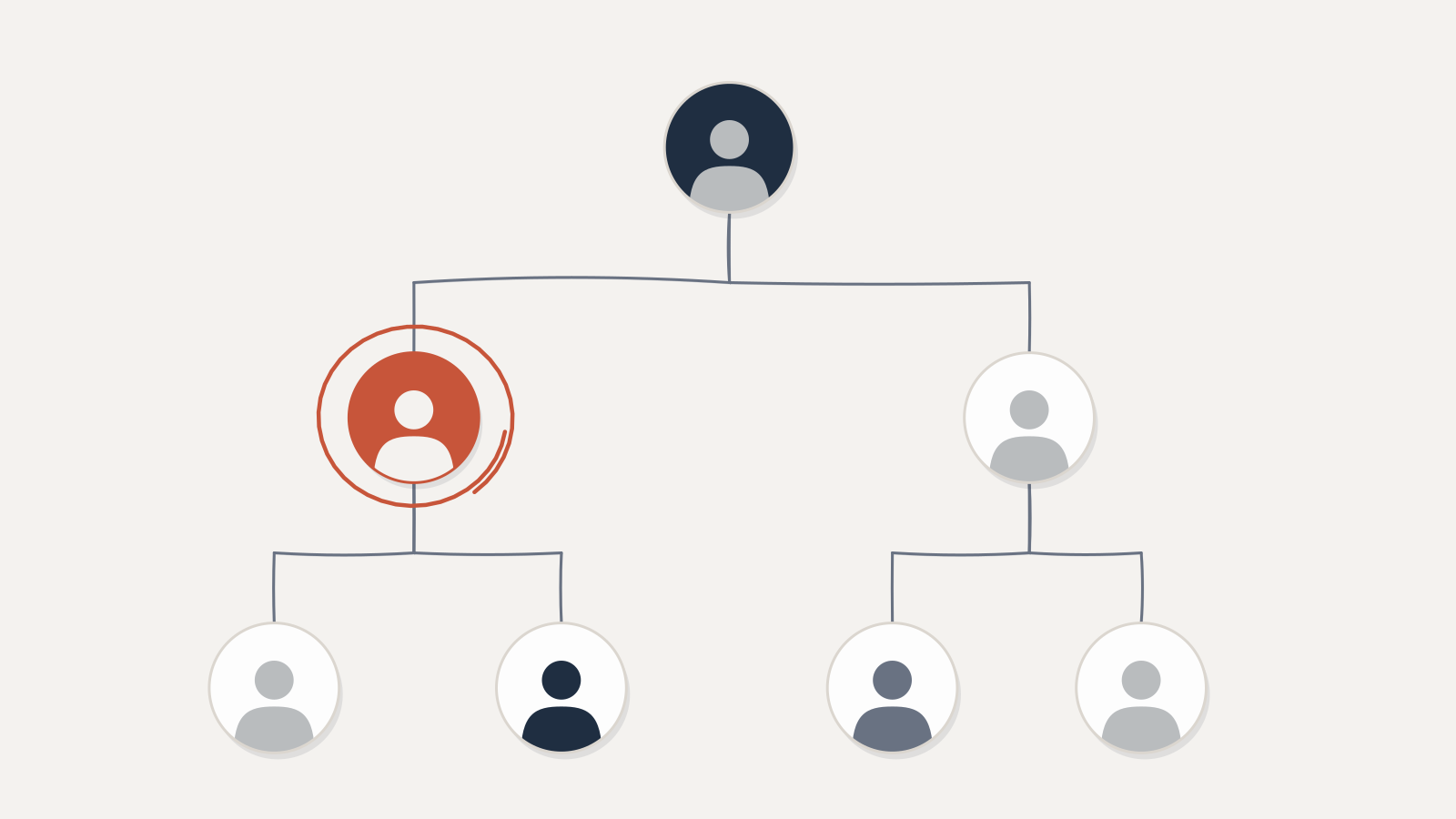
Building strong cross-functional relationships remains one of the toughest challenges HR professionals face in modern organizations. This article presents twelve unconventional methods that experts in the field actually use to break down silos and create genuine collaboration between departments. These practical approaches go beyond traditional team-building exercises to deliver measurable results in how teams work together.
SK



12 people answered: George, Sahil, Rory and 9 more
Another unique approach I used was to get directly involved in the product and engineering processes during short stints, not as an HR person who observes but as someone who is actively part of the planning process, retrospectives, and other discussions that happen during decision-making sessions.
By moving out of the conventional scope of HR, it was easy to earn the trust of other employees, as I was adding value to what was being done at work instead of just supporting the activities being undertaken.
An unconventional move that helped us build influence was creating decision diaries with leaders from different teams. After major calls we spent ten minutes writing why a decision was made and what assumptions shaped it. We also noted the risks we accepted at that time. Over time these notes showed that most conflicts did not come from capability but from assumptions that were never clearly stated.
Once teams saw this pattern they became better at questioning ideas without questioning intent. This helped us move beyond a typical HR role and become more strategic in our work. We were not only supporting people issues but also improving how decisions were made. That gave us stronger trust with senior leaders and helped us influence outcomes earlier.
I'll share something that really shifted how I operate at Equipoise Coffee. Early on, I realized the traditional approach of formal meetings and email chains wasn't building genuine connections with our roasting team, sourcing partners, or warehouse staff. So I started what I call "cupping sessions with a twist."
Every Friday morning, I'd invite someone from a different part of the business to cup coffee with me. Not in a formal, structured way. Just two people, some freshly roasted samples, and honest conversation. Our head roaster taught me about heat transfer profiles while I shared what customers were telling us through reviews and emails. Our warehouse manager opened up about fulfillment bottlenecks over a natural processed Ethiopian.
These weren't performative check-ins. I genuinely wanted to understand their challenges, and I think they sensed that. When I needed buy-in for a new e-commerce initiative or wanted to test a small batch roast, I already had trust built through those informal moments.
The benefit of stepping outside conventional boundaries was simple. People stopped seeing me as just "the website person" or "the business operator." I became someone who actually understood the full chain from green bean to customer doorstep. That knowledge gave me credibility when proposing changes or rallying the team around new ideas.
I can't overstate how much this shaped Equipoise Coffee. Some of our best product ideas came from those casual cupping conversations. Our seasonal offerings improved because I understood sourcing constraints. Our fulfillment got smoother because I'd heard the warehouse team's pain points firsthand.
Relationships built over shared coffee have a different quality to them. There's vulnerability in tasting together, in admitting what you don't know. That authenticity translated into real influence when we needed to move quickly or make hard decisions as a team.
One of the most effective and admittedly unconventional methods I used to build cross-functional relationships was embedding myself directly into operational workflows that HR typically observes from a distance. Early on, I realized that influence isn't granted by title in HR; it's earned through proximity to real business challenges.
So instead of limiting my role to policy, talent strategy, and advisory, I took on a temporary "rotation" inside our client delivery and sales teams. I joined pipeline calls, sat in on client problem-solving sessions, and even co-owned a few deliverables. This wasn't about overstepping, it was about understanding pressure points firsthand. When a sales leader is trying to close a deal at quarter-end or a delivery team is navigating scope creep, HR advice hits differently if it's grounded in lived context.
One moment stands out: during a high-stakes client engagement, I noticed friction between our technical and account teams, a classic misalignment. Because I had built trust on both sides by working alongside them, I was able to step in not as "HR," but as a translator of priorities. We restructured communication rhythms and clarified accountability in a way that stuck, not because it was mandated, but because it was co-created.
Stepping outside traditional HR boundaries transformed my effectiveness in two key ways. First, it accelerated trust. People are far more receptive when they see you as part of the mission, not just a compliance checkpoint. Second, it sharpened my decision-making. Policies and people strategies became more pragmatic, more aligned to revenue and delivery realities, and ultimately more respected.
If there's a takeaway here, it's this: influence in HR grows exponentially when you trade observation for participation. Embedding yourself in the business, even temporarily, turns you from a support function into a strategic force.
One unconventional thing I did was stop treating relationship-building like a networking exercise and start treating it like a workflow problem. I set up shared handoff views and cross-functional review points so strategy, content, ops, and delivery could all see the same work, the same blockers, and the same next move. That built influence faster because I was not asking people to trust me in theory. I was helping remove friction from their day. Stepping outside traditional HR boundaries helped because the trust came from solving operational pain in real time, not from running a culture exercise and hoping it changed behaviour.
The most unconventional thing I ever did to build cross-functional relationships was simple: I stopped treating titles as a filter for good ideas. Every voice in the company gets heard, regardless of role, seniority, or department. That decision changed everything about how we work together.
Most organizations say they want collaboration, but their structure tells a different story. Decisions flow down, ideas get filtered up, and whole layers of perspective never make it into the room. I was intentional about breaking that. If someone had a better way to serve a customer, I wanted to hear it, and I wanted them to know it would actually go somewhere.
What surprised me was how much that shifted my own influence as a leader. When people see that their input shapes real decisions, they stop waiting to be told what to do and start owning the outcome. The cross-functional relationships that formed were not a byproduct of some program or initiative. They grew because people were working toward the same thing and genuinely trusted that their perspective mattered.
That kind of trust is hard to manufacture and impossible to fake. We are a diverse group, different backgrounds, different cultures, different ways of seeing the same problem, and that diversity only becomes a strength when everyone believes they have a real seat at the table. Effectiveness as a leader did not come from authority. It came from building a place where the best idea wins.
One unconventional approach I took at Sunny Glen Children's Home was joining the overnight residential staff shifts once a month. I'm in a support role, but I wanted to truly understand what our frontline care workers experience every day. Most administrative people stay in their offices during business hours, but I grabbed a cot and spent Friday nights in the cottages with our youth.
This changed everything about how I approach my work. When you're helping a teenager through a crisis at 2 AM or playing cards with kids who can't sleep, you build a kind of trust that no team-building workshop can create. Our residential staff started seeing me as someone who genuinely understands their challenges, not just another person handing down policies from behind a desk.
The relationships I built during those overnight shifts meant that when we needed to implement new procedures or address staffing concerns, I already had credibility. Our cottage supervisors began reaching out to me directly with ideas and feedback because they'd seen me in the trenches with them.
Stepping outside my traditional role gave me insights I never would have gotten otherwise. I saw firsthand how our scheduling system created gaps that put stress on both staff and youth. I noticed which training methods actually worked in real crisis situations versus what looked good on paper. When I brought these observations to leadership meetings, my input carried weight because it came from direct experience, not just reports.
I've found that real influence comes from being willing to do the work alongside people, not managing from a distance. Our care team knows I'm not asking them to do anything I haven't done myself, and that mutual respect has transformed how we collaborate across all departments at Sunny Glen.
The most effective method for us was bringing entire departments together in joint meetings rather than relying on individual conversations between employees.
When two people pass information between departments, things get lost, distorted, or filtered. When the teams sit in the same room and talk directly, the broken telephone disappears. Conflicts are resolved faster, context is shared accurately, and the relationship between departments becomes functional rather than transactional.
In my experience, almost every cross-functional problem traces back to the same root cause: insufficient direct communication among the people who actually do the work.
Nick Anisimov
Founder, FirstHR
https://firsthr.app
https://www.linkedin.com/in/nickanisimov/
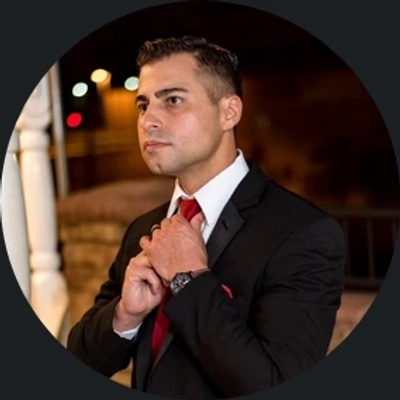
As the CTO and Co-Founder of a nationwide virtual behavioral health platform, my most critical cross-functional relationship is bridging the gap between software engineering and clinical operations. These two groups inherently speak different languages. Engineers think in logic, scale, and binary outcomes. Therapists and clinical social workers think in human behavior, nuance, and risk.
Traditional HR methods for building team cohesion, like virtual happy hours or personality assessments, are completely ineffective for high-achieving professionals. They feel forced, artificial, and pull focus away from deep work.
My unconventional method for building cross-functional influence was implementing what I call Cross-Disciplinary Operational Shadowing.
Instead of hosting standard alignment meetings, I mandated that our lead backend developers sit quietly in the virtual room during de-identified clinical case consultations. Conversely, our lead therapists were required to shadow the engineering team during a live, high-stakes infrastructure deployment.
How stepping outside traditional boundaries drove effectiveness:
This approach completely bypassed artificial HR exercises and forced genuine, mutual empathy through shared operational reality.
When an engineer listens to a clinician consult on a severe burnout case for an executive client, they stop seeing our Electronic Health Record as just a database. They realize the user interface friction they build has a direct impact on a provider's cognitive load during a crisis intervention. When a clinician watches an engineer navigate a complex server migration, they stop viewing the tech team as an anonymous IT desk and start understanding the rigid constraints of our digital architecture.
It exponentially enhanced my influence because I stopped acting like a traditional executive trying to mandate culture from the top down. By putting both teams directly into each other's daily operational stress, the cross-functional respect grew organically. When I eventually had to ask either team to make a difficult operational compromise, the internal resistance was zero. They trusted the directive because they fundamentally understood the pressure the other side of the business was facing.

I'm Runbo Li, Co-founder & CEO at Magic Hour.
The most unconventional thing I ever did to build cross-functional relationships was simple: I stopped thinking in terms of org charts and started thinking in terms of problems people couldn't solve alone.
At Meta, I was on the New Product Experimentation team. By definition, we were building things that didn't exist yet, which meant no one had a playbook. I made it a habit to sit with people outside my function, not for "networking" but to understand what was actually blocking them. Engineers, designers, content strategists. I'd show up with something useful. A data insight they didn't have. A prototype I'd hacked together over the weekend. A connection to someone on another team who'd solved a similar problem six months ago.
One specific example: there was a content team struggling to measure the impact of short-form video experiments. Their analytics setup wasn't built for what they were trying to do. I spent a weekend building a lightweight dashboard that gave them real-time signal on what was working. Nobody asked me to do it. It wasn't "my job." But overnight, I became the person that team called first when they had a new idea. That relationship opened doors to projects I never would have been staffed on through normal channels.
The principle is what I call "solve first, ask later." Most people try to build influence by requesting access, scheduling intros, or waiting for permission. That's backwards. You build influence by making yourself indispensable to someone else's mission before they even know to ask for your help.
This is exactly how David and I run Magic Hour today. We're two people serving millions of users. We don't have departments. We don't have traditional boundaries. Every problem is everyone's problem, and the fastest path to influence is being the person who fixes something nobody else was going to fix.
Stepping outside traditional boundaries isn't a risk. Staying inside them is. The people who wait for their job description to tell them what to care about are the ones who get passed over when real opportunities show up.

We found that one of the best ways to build influence was to spend time in retailer line review prep even though that work was outside a people function. These sessions showed how teams negotiated priorities under pressure and where misalignment quietly drained energy. By listening to what sales needed from finance and what finance needed from operations we could spot gaps early before they became performance issues.
This outside view made our guidance more practical and trusted. Instead of broad advice we connected team dynamics to real commercial moments that mattered. People were more open because they felt understood in context. Influence grew because we helped teams work together better. We focused on shared outcomes more.
Building Cross-Functional Relationships Beyond Traditional HR Boundaries
One unconventional method I used to build cross-functional relationships and enhance my influence was creating a reverse mentoring program between HR and departments like IT, sales, and operations. Traditionally, HR is seen as a support function, but I realized that to truly influence and drive business results, I needed to understand other teams' challenges and work alongside them.
The program worked by pairing up senior leaders from other departments with junior HR team members. The twist was that the senior leaders acted as mentees, while HR professionals became the mentors. The goal was to break down silos and foster mutual understanding between teams. By stepping outside of the typical HR boundaries, we could gain insights into what was working well (or not) in other departments, and this gave HR a seat at the table for strategic decision-making.
For example, our IT department faced challenges in onboarding new hires quickly due to technical constraints in the system. Instead of just providing a generic HR solution, I worked directly with the IT team to understand the root causes and identified tech-based solutions that automated some of the onboarding tasks. In return, the IT team gained a better understanding of the human factors involved in employee satisfaction and retention.
This initiative proved beneficial in two ways. First, it allowed me to build stronger relationships with other teams, making HR a more integral part of the larger business strategy. Second, it led to tangible outcomes. Cross-functional insights led to a 20% faster onboarding process and improved collaboration on employee engagement projects.
Stepping outside traditional HR boundaries helped me gain respect from other departments and shaped me into a more effective leader not just in HR but across the business. This shift ultimately gave me the credibility I needed to influence decisions at a strategic level, rather than just being seen as a process manager. The key takeaway: HR professionals who engage beyond their typical scope become invaluable partners, enhancing influence and driving broader business impact.